
Loud and quiet recitation
The table below describes the imam’s recitation in congregational fard prayer and the usual pattern for someone praying alone. In Hanafi fiqh, a follower behind the imam does not recite Qur’an during the standing recitation; the follower follows the imam and listens. Other Sunni schools differ on the follower’s recitation.
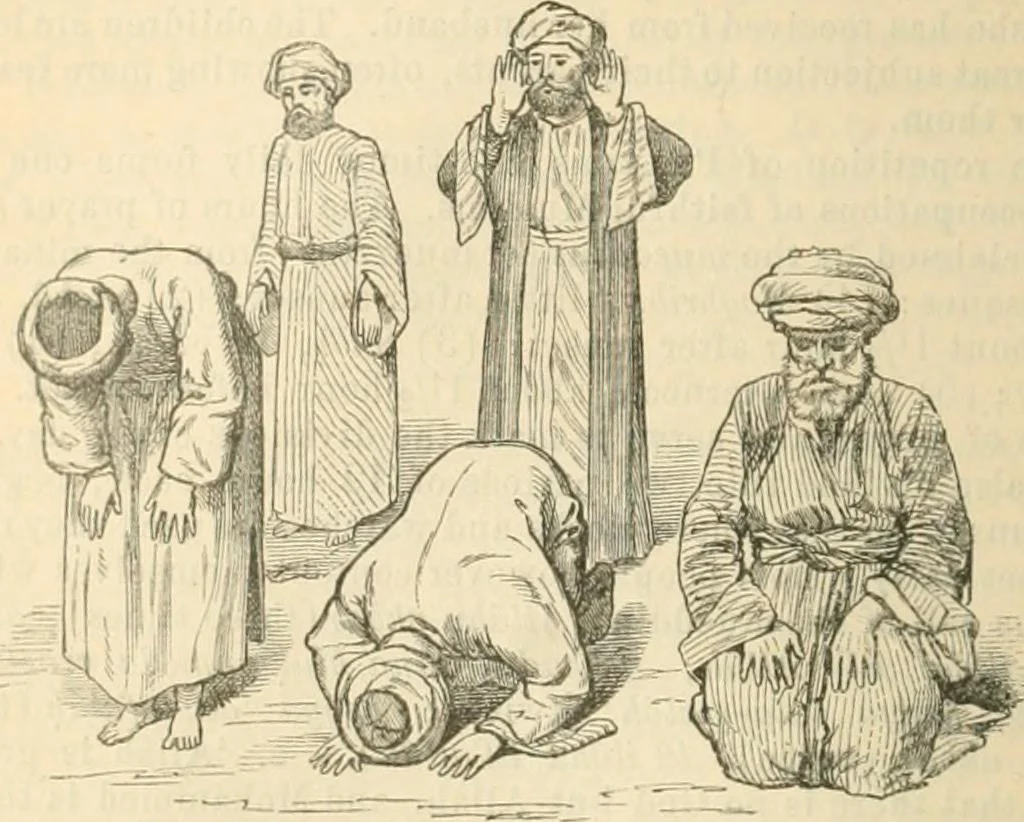
For the imam (and generally a person praying alone), this table shows the usual loud and quiet recitation pattern in the daily obligatory (fardh) prayers and the Friday congregational prayer (Jumuʿah).
| Prayer | Rakats | Recitation |
|---|---|---|
| Fajr | First 2 rakats | Recite out loud |
| Dhuhr (Zuhr) | All rakats | Recite quietly |
| Asr | All rakats | Recite quietly |
| Maghrib | First 2 rakats | Recite out loud |
| Third rakat | Recite quietly | |
| Isha | First 2 rakats | Recite out loud |
| Third and fourth rakats | Recite quietly | |
| Friday (Jummah) | Both rakats | Recite out loud |
Joining a congregational prayer late
Join the imam immediately: say the opening takbir while standing if you are able, then move into whatever posture the imam is in. Do not wait for the next rakʿah.
When does the rakʿah count? In the Hanafi school, if you reach rukuʿ and bow with the imam before the imam rises from rukuʿ, that rakʿah counts. If the imam has already risen before you catch the bowing, that rakʿah is made up after the imam finishes.
After the imam finishes: remain with the imam to the end of the congregational prayer, then stand and complete the rakʿahs you missed. The recitation details for a latecomer depend on which rakʿahs were missed, so use a reliable Hanafi reference if the sequence is unfamiliar.